 PARADOX
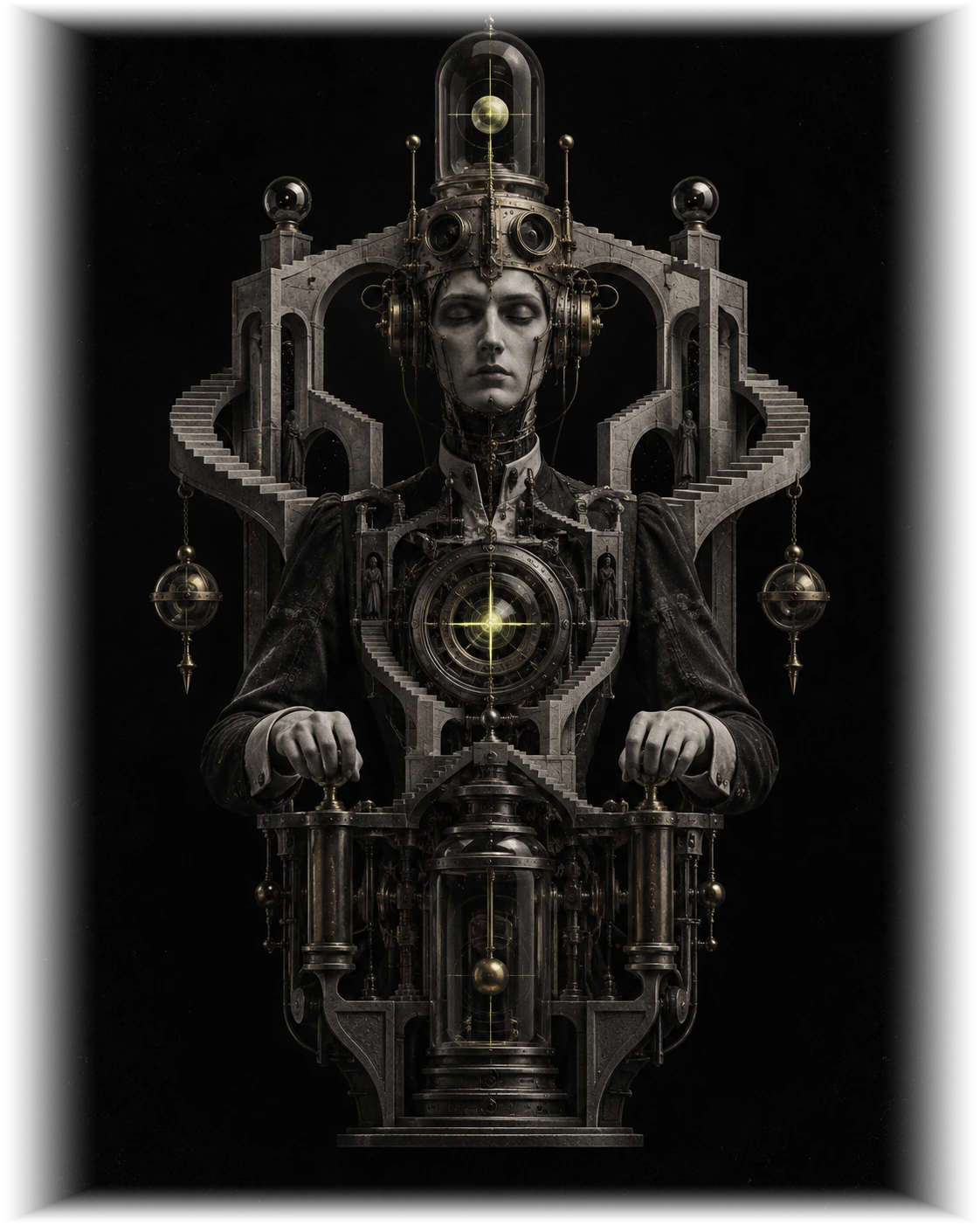
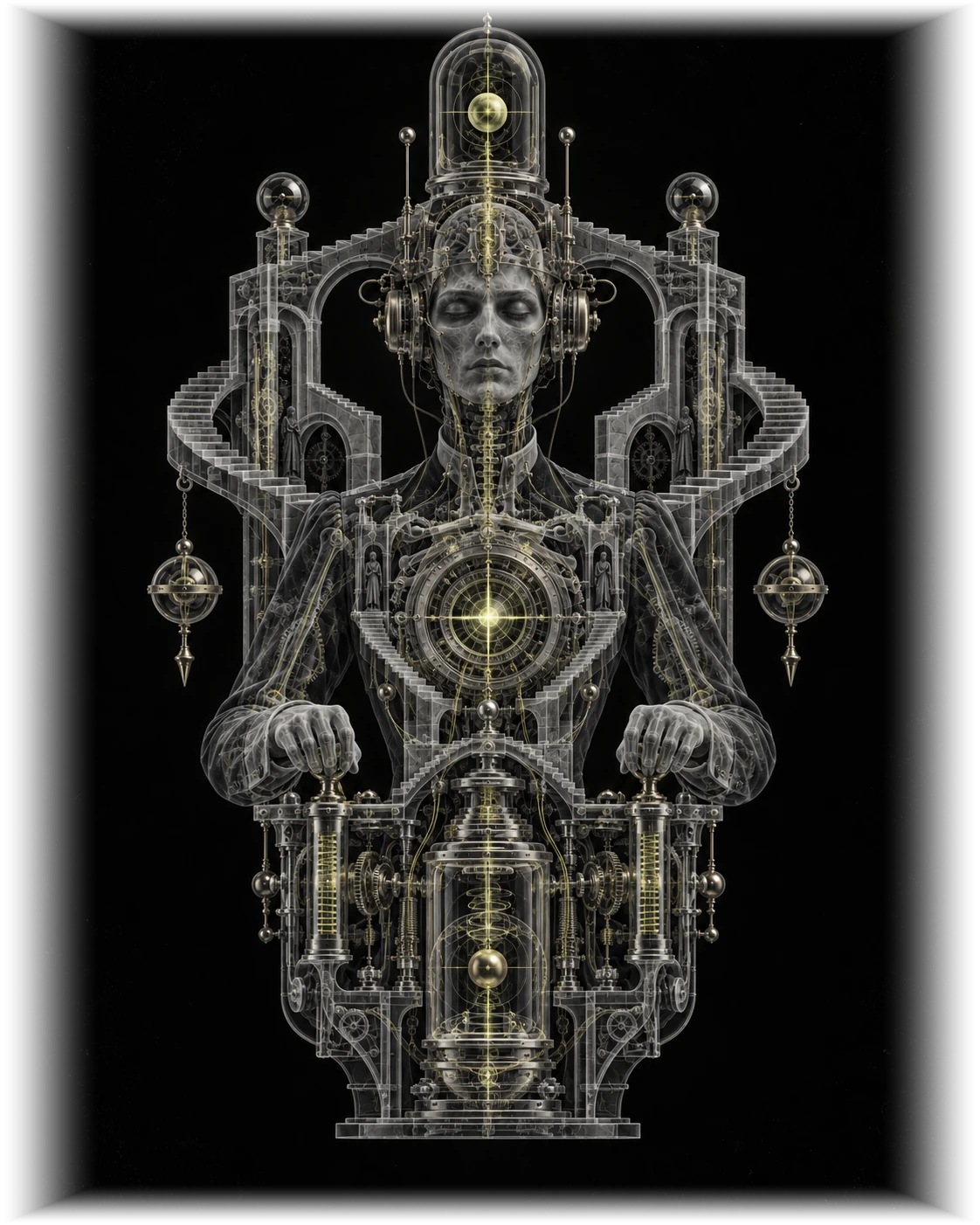
AI can save enormous amounts of time and still need human verification.
✳ MOVE / TOUCH TO INSPECT · SELECT FOR DETAIL
SURFACE
Move across the apparatus to expose the hidden system beneath the visible answer.
SCAN READY
THE PARADOX / IN PLAIN ENGLISH
Two opposing truths can exist at the same time.
AI can make information easier to use while making data harder to control.
AI can increase capability while increasing the consequence of getting something wrong.
Paradox exists in that tension — helping small businesses use AI without surrendering visibility, judgement or control.
WHAT PARADOX DOES
A fixed-scope review of how your business uses AI.
What information goes in. Which answers need checking. What to fix first.
Paradox looks at the AI tools, people and everyday workflows already inside your business. We follow the information going in, identify the outputs that matter enough to verify, and turn the findings into practical rules and a prioritised action plan.
Explore the AI Reality Check ↗WHAT YOU RECEIVEFive practical outputs
AI use inventory · data exposure view · verification map · staff rules · prioritised action plan.
COMMERCIALSAgreed before work begins
Fixed scope. Fee agreed upfront. Turnaround and any specialist requirements confirmed before the review starts.
ACCOUNTABILITYA named human owns the recommendation
AI may assist analysis and drafting. Human judgement remains responsible for the conclusions and next steps.
THE PARADOX OF THE ANSWER
What you see is simple.
What you see is simple.
What produced it isn’t.
The inspection lens exposes the parts that are easier to miss: what went in, what shaped the answer, what still needs checking and what may happen to the information afterwards.
Files, prior instructions and surrounding context can materially change the result without being visible in the final response.
Prior signals, remembered context and patterns can influence the next response. Useful context and unwanted carry-over can look identical from the surface.
The polished output compresses a hidden reasoning process. Assumptions, omissions and uncertainty still require human judgement.
Prompt wording, constraints, attachments and settings materially shape what the system does and what it is allowed to use.
No. Presentation quality is not evidence. Important answers still need source checks and verification proportional to consequence.
Logging, storage, memory and downstream processing matter just as much as the response visible on screen.
Your business is
already in the
AI conversation.
The meeting transcription. The chatbot writing a proposal. The customer spreadsheet uploaded for a quick answer.
The question is whether you know where your information is going — and whether you can trust what comes back.
See the risks hiding in the everyday ↗
03 / THE AI REALITY CHECK
Know what goes in.
Know what goes in.
Verify what comes out.
A fixed-scope review of how your business uses AI, what information enters it, which outputs need verification and the actions that matter first.
01
See the use.
Identify the tools, people and everyday tasks already involving AI.
02
Follow the data.
Understand what business, customer or staff information may be entering those tools.
03
Test the output.
Match verification and human review to the consequence of getting an answer wrong.
04
Act on it.
Leave with practical rules and a prioritised action plan—not a document that sits in a folder.
See the review ↗Limited founding-client intake.
Scope, fee and timing agreed before work begins.
Scope, fee and timing agreed before work begins.
ILLUSTRATIVE EXAMPLE / A SMALL BUSINESS
One ordinary AI task.
One ordinary AI task.
Several hidden decisions.
A small-business owner asks an AI assistant to prepare a customer proposal using an email, an internal price list, supplier notes and a previous proposal. It feels like a simple writing task. It isn’t.
What was entered?
Customer details, internal pricing, supplier information and commercial notes may now be inside a tool or account whose storage, retention and training settings have not been checked.
What can the AI actually prove?
It can improve structure and wording. It cannot establish that the prices are current, the terms are approved, the source information is complete or every factual claim is correct.
What happens if it sounds right?
A polished proposal can hide a stale price, an invented statement or an incorrect term. The better the writing looks, the easier it can be to rely on without checking.
What would Paradox change?
Use the minimum necessary data, define approved tools, verify important facts against source material, and put a named human sign-off around consequential outputs.
Illustrative scenario only — not a client case study or claim of client results. The same pattern can occur in retail, professional services, trades, property, administration, hospitality and other small-business workflows.
WHAT PARADOX PUTS BACK UNDER CONTROL
The technology can stay fast.
The technology can stay fast.
The decisions become deliberate.
These are the four practical control areas the review is designed to make visible.
Know where AI is actually being used.
Identify the tools, people and everyday tasks already involving AI — including unofficial use that has never been written down.
Decide what is allowed to go in.
Separate public, internal, personal and commercially sensitive information so staff have usable boundaries instead of assumptions.
Make handling decisions visible.
Check the tool, account, storage and retention questions that matter, and identify where legal or specialist advice is actually required.
Match the check to the consequence.
Define which AI outputs need source evidence, expert review or human sign-off before the business relies on them.
The outcome is not “use less AI.” It is use AI with clearer boundaries, stronger checks and named accountability.
OUR OWN HOUSE / INFORMATION HANDLING
If we ask you to think about data,
If we ask you to think about data,
we should be clear about ours.
The handling rules change with the engagement, but the starting position should be visible before you enquire.
Nothing is sent to us.
The free Risk Check runs in your browser. It asks for no name, no email and no documents, and the site code does not send the answers to a live AI service.
Send the minimum needed.
The enquiry form collects the contact and business information you choose to provide. Do not send passwords, client files, health information or financial account details through the form.
AI-assisted. Human-accountable.
Paradox may use AI for structured analysis and drafting. Before client material is processed, the engagement scope should make clear what information is required, what tools are permitted and what must stay out.
Know when the question changes.
We flag where questions should be checked against the New Zealand Privacy Act 2020 or, where applicable, the Australian Privacy Act 1988. Paradox is not legal advice, a security test or certification.
04 / FOLLOW-ON WORK
Less uncertainty.
Less uncertainty.
More direction.
 THERE IS MORE THAN ONE WAY UP.
05 / INTELLIGENCE, WITH ACCOUNTABILITY
AI helps with
AI helps with
the legwork.
People own
the decisions.
Paradox combines AI-assisted analysis with accountable human review. Clear scope. Practical actions. No automated stamp of compliance.
Explore our approach ↗Built from the real world,
not the AI bubble.
Paradox is led by Rick Jones. His background spans business ownership, project delivery, operational systems, and AI Governance Manager and Data Governance Manager roles at Auckland Transport.
Business ownership · project delivery · operational systems · AI governance · data governance · practical AI implementation.
That mix shapes the work around the way small businesses actually operate: real customers, real staff, real information, real commercial pressure and real consequences. The objective is not to turn owners into AI experts. It is to give them enough visibility and control to use AI deliberately.
Meet the thinking behind Paradox ↗Find a way
forward.
Explore the AI Reality Check ↗
Start free with the AI Risk Check.Go deeper only if the findings justify it.